In today’s competitive manufacturing industry, precision is everything. Whether it’s automotive components, industrial machinery, aerospace parts, or architectural designs, manufacturers demand high accuracy, clean finishes, and faster production times. This is where laser cutting has transformed the metal fabrication industry.
Laser cutting technology has become one of the most reliable and efficient methods for shaping metal with exceptional precision. Compared to traditional cutting methods, laser cutting offers superior accuracy, minimal material waste, and the ability to create complex designs with ease.
In this blog, we’ll explore how laser cutting improves precision in metal fabrication and why it has become an essential process for modern manufacturing.
What Is Laser Cutting?
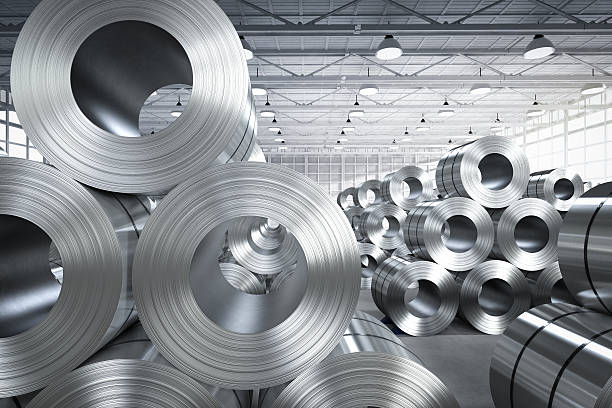
Laser cutting is a fabrication process that uses a highly focused laser beam to cut, engrave, or shape metal materials. The laser generates intense heat that melts, burns, or vaporizes the material, resulting in clean and accurate cuts.
This technology is commonly used for cutting:
- Stainless steel
- Mild steel
- Aluminum
- Copper
- Brass
- Titanium
Laser cutting machines are controlled by computer numerical control (CNC) systems, ensuring highly consistent and repeatable results.
The Importance of Precision in Metal Fabrication
Precision plays a crucial role in metal fabrication because even minor inaccuracies can affect:
- Product quality
- Structural integrity
- Assembly compatibility
- Production efficiency
- Material costs
Industries such as aerospace, medical equipment, and automotive manufacturing require extremely tight tolerances to ensure safety and functionality. Laser cutting helps meet these strict standards with remarkable accuracy.
How Laser Cutting Enhances Precision
1. Extremely Accurate Cutting
One of the biggest advantages of laser cutting is its exceptional cutting accuracy. Laser machines can achieve tolerances as tight as ±0.1 mm, depending on the material and thickness.
The focused laser beam creates narrow cuts with minimal deviation, ensuring every component matches exact specifications.
Benefits:
- Consistent dimensions
- High repeatability
- Reduced production errors
- Better product quality
This level of precision is difficult to achieve with traditional cutting methods like plasma cutting or mechanical sawing.
2. Clean and Smooth Edges
Traditional cutting methods often leave rough edges, burrs, or uneven surfaces that require additional finishing work. Laser cutting produces clean, smooth, and polished edges with minimal imperfections.
Because the laser beam is highly concentrated, the surrounding material experiences very little distortion.
Advantages:
- Reduced post-processing
- Faster production
- Improved appearance
- Better fitting components
This is especially beneficial for decorative metalwork and precision engineering applications.
3. Minimal Heat-Affected Zone (HAZ)
Heat can distort metal during fabrication, affecting dimensional accuracy and structural quality. Laser cutting minimizes the heat-affected zone because the laser applies heat only to a small, concentrated area.
Result:
- Less warping
- Reduced thermal distortion
- Higher dimensional stability
This is particularly important when working with thin metal sheets or delicate components.
4. Ability to Create Complex Designs
Laser cutting technology allows manufacturers to produce highly detailed and intricate designs that would be difficult or impossible with conventional cutting methods.
CNC-controlled laser systems can follow complex patterns with incredible precision.
Examples:
- Fine holes
- Sharp corners
- Detailed engravings
- Intricate geometric patterns
This capability is widely used in industries such as architecture, electronics, and custom metal fabrication.
5. High Repeatability and Consistency
Consistency is essential in mass production. Laser cutting machines can reproduce the same design thousands of times without variations.
Since the process is automated and digitally controlled, human error is significantly reduced.
Benefits for manufacturers:
- Uniform product quality
- Faster batch production
- Reduced material waste
- Improved operational efficiency
This makes laser cutting ideal for both small-scale custom jobs and large-volume manufacturing.
6. Reduced Material Waste
Laser cutting systems optimize material usage through precise nesting software that arranges parts efficiently on metal sheets.
The narrow laser beam also removes less material during cutting compared to traditional methods.
Outcome:
- Lower raw material costs
- Higher production efficiency
- More sustainable manufacturing
Reducing waste is not only cost-effective but also environmentally beneficial.
7. Faster Production Speeds
Modern laser cutting machines operate at high speeds while maintaining precision. Faster cutting means shorter production cycles and quicker turnaround times.
Manufacturers can complete projects more efficiently without compromising quality.
Key advantages:
- Increased productivity
- Faster delivery
- Reduced labor costs
- Better customer satisfaction
Industries That Benefit from Precision Laser Cutting
Many industries rely on laser cutting for high-precision fabrication, including:
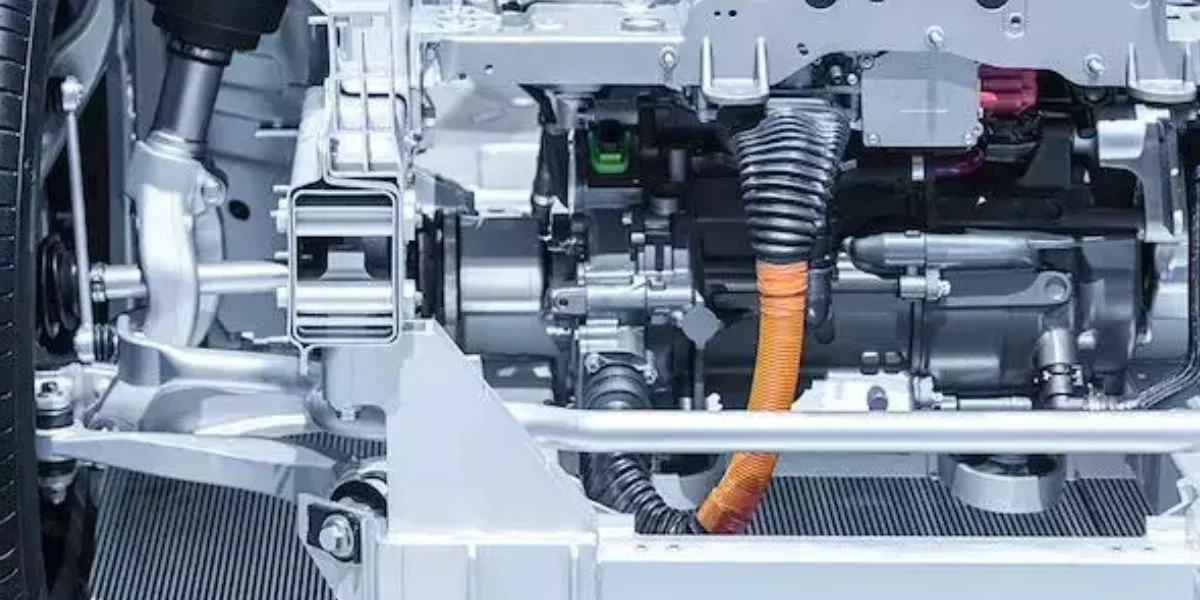
Automotive Industry
Used for manufacturing body panels, brackets, exhaust systems, and structural components.
Aerospace Industry
Requires extremely accurate and lightweight components with tight tolerances.
Medical Equipment
Laser cutting is ideal for producing surgical instruments and medical device components.
Construction and Architecture
Used for decorative metal panels, railings, and structural fabrication.
Electronics Manufacturing
Essential for producing small and precise metal parts.
Laser Cutting vs Traditional Cutting Methods
| Feature | Laser Cutting | Traditional Cutting |
|---|---|---|
| Precision | Very High | Moderate |
| Edge Quality | Smooth & Clean | Rough |
| Material Waste | Minimal | Higher |
| Complex Designs | Excellent | Limited |
| Speed | Fast | Slower |
| Post-Processing | Minimal | Often Required |
This comparison clearly shows why laser cutting has become the preferred choice for precision metal fabrication.
Future of Laser Cutting Technology
Laser cutting technology continues to evolve with advancements such as:
- Fiber laser systems
- AI-powered automation
- Smart manufacturing integration
- Improved energy efficiency
- Faster cutting speeds
These innovations are helping manufacturers achieve even greater levels of precision, productivity, and cost savings.
Conclusion
Laser cutting has revolutionized the metal fabrication industry by delivering unmatched precision, speed, and efficiency. Its ability to produce accurate cuts, smooth finishes, and complex designs with minimal waste makes it an essential technology for modern manufacturing.
From automotive and aerospace to medical and architectural applications, laser cutting continues to improve production quality while reducing operational costs.
As industries demand higher precision and faster turnaround times, laser cutting will remain a key driver of innovation in metal fabrication.
If your business requires accurate, efficient, and high-quality metal fabrication, investing in laser cutting technology can provide a significant competitive advantage.